6 October 2026
Almaty to Begin Connecting Residential Buildings to Central Heating on October 9
Almaty will start connecting residential buildings to central heating on October 9, as temperatures drop. Social institutions will be prioritized first.
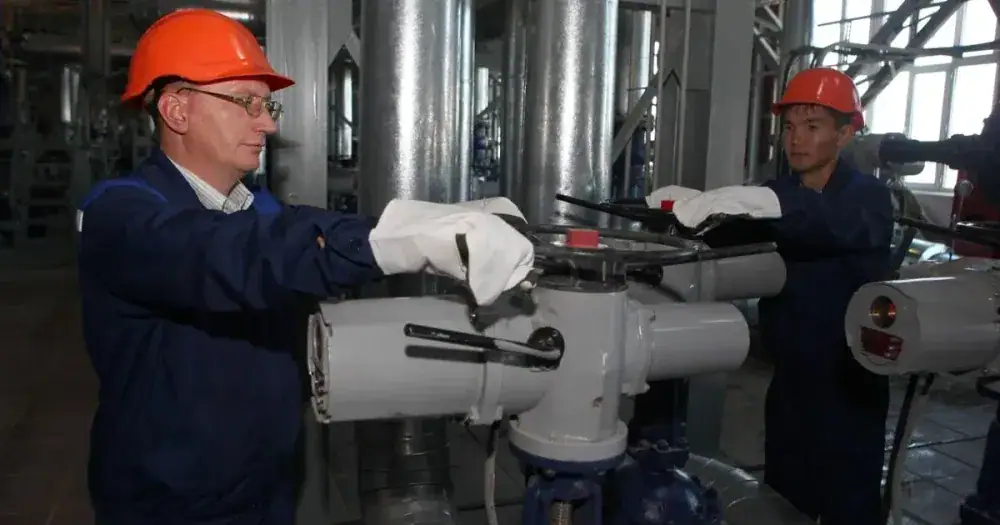
Starting October 9, Almaty will begin connecting residential buildings to the central heating system. This decision was made due to a sharp drop in air temperature, following the directive of the city akim, Darkhan Satybaldy.
Initially, heating will be supplied to social institutions—kindergartens, schools, and medical facilities. This was announced by the Almaty Department of Energy and Water Supply.
The connection of residential buildings is scheduled to begin on October 10. After the heating is supplied to the building's entrance, specialists from the housing cooperatives and homeowners' associations will adjust the internal systems—bleeding air from radiators and risers, adjusting pressure, and ensuring even heating of the apartments.
Read also:
Almaty Heating Networks LLC has completed preparations for the winter season. To quickly respond to potential malfunctions, an emergency supply of materials and equipment has been established. During the 2026–2027 heating season, 16 emergency and repair teams will be on duty, comprising a total of 220 specialists and 56 units of equipment.
reports ЖКХ24, citing the website of the Almaty Department of Energy and Water Supply.
Photo: gov.kz
6 October 2026
Jetisu to Establish Management Center for Centralized Infrastructure Monitoring
Jetisu plans to establish a centralized City Management Center in Taldykorgan for better infrastructure monitoring as part of the 'Digital Kazakhstan' initiative.

Jetisu plans to create a City Management Center in Taldykorgan for centralized infrastructure monitoring and coordinating city services as part of the 'Digital Kazakhstan' program. This initiative is crucial for implementing digital transformation projects in public administration and developing digital infrastructure in the region, reports the press service of the Jetisu Akim.
According to the regional department of digital technologies, digital tools have been introduced in public administration to facilitate interaction with the population and to base decisions on significant data. The region has a unified contact center 'Service 109' and a regional situational center in operation.
Simultaneously, a human and innovative base for the digital economy is being formed. In the IT hub 'Jetisu Digital', over 300 people have been trained under the 'Samsung Innovation Campus' program. Additionally, support is provided for 10 startup projects in various fields. Recently, the 'Tomorrow School' campus opened in Taldykorgan. For the first intake, over 600 applications were submitted, and more than 70 people completed the training. The second wave started on September 28, according to Aydin Temirbayev, head of the digital technologies department.
Digital technologies are also being actively implemented in healthcare. All hospitals in the region are integrated with the 'PACS' system, and medical information systems 'Jetisu', 'DamuMed', and 'Komek 103' are operational. The 'CEREBRA AI' system has been introduced in three medical facilities in the region for analyzing CT scans and early stroke detection. Furthermore, all 32 emergency rooms are fully equipped with video surveillance, and 'Smart Tokens', 'Cold Chain' system, and telemedicine complexes have been implemented.
Read also:
Ministry of Energy and Industry Experts Discuss Development Prospects for Professional Qualifications in Electricity and Heat Energy
23 October 2026
Comprehensive Digital Traceability to Cover 80% of Energy Resources by 2028
22 October 2026
Over 2,200 Requests from Astana Residents Submitted via TazaQazBot Since Beginning of the Year
21 October 2026
In the realm of security and 'Smart City' initiatives, intelligent video monitoring systems are actively used. There are 137 hardware-software complexes with 579 cameras installed on the roads of the region, and the 'Target-EYE' system has been expanded this year.
Simultaneously, the development of digital infrastructure is expected to continue. In 2026-2027, 160 rural settlements are expected to be connected to the internet through the construction of fiber-optic communication lines. Currently, the internet is available in 348 settlements in the region, which is 97.7% coverage.
Thus, the implementation of the 'Digital Kazakhstan' strategy in Jetisu covers key areas such as public administration, healthcare, security, IT workforce preparation, and digital infrastructure development.
as reported on the website of the Jetisu Region Energy and Utilities Services Department.
Photo: gov.kz