7 July 2026
Kazakhstan Aims to Boost Gasification to 80% by 2035
Kazakhstan plans to increase its gasification level from 64.2% to 80% by 2035, impacting millions and enhancing gas supply infrastructure.

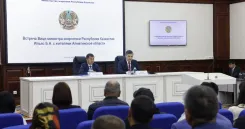
In response to directives from the President given at a joint session of Parliament, Kazakhstan is set to accelerate regional gasification, aiming to cover 80% of the population by 2035. This announcement was made by Energy Minister Yerlan Akkenzhenov during a Government meeting.
Currently, the country’s gasification level is at 64.2%, with 13.1 million people having access to natural gas. This year, the development of the gas transport system will continue with 40 projects, including 7 ongoing and 33 new ones.
A key development in providing natural gas to the north of the republic is the signing of a Memorandum between the Government of Kazakhstan and PJSC Gazprom concerning the construction of the Ishim – Astana main gas pipeline. This project will ensure reliable gas supply to the cities of Astana, Kokshetau, and Petropavlovsk, as well as diversify natural gas supply routes to the northern regions of the country.
“The level of the country's gasification is planned to increase from 64.2% to 80% by 2035. By the end of 2025, gas transit will total 70.4 billion m3, with the plan for 2026 set at 73.3 billion m3. The actual figure for the first five months of 2026 is 30.3 billion m3,”
— reported the minister.
as reported by ЖКХ24 referencing the Ministry of Energy's website.
Photo: gov.kz
7 July 2026
AI Agents Assist in Managing Kazakhstan's National Electrical Grid
Kazakhstan's Ministry of Energy and KEGOC are leveraging AI to enhance operational efficiency in managing the National Electrical Grid, implementing 35 projects focused on automation and analytics.

In its commitment to digitizing the energy sector, the Ministry of Energy is partnering with JSC "KEGOC" to incorporate artificial intelligence not just in administrative tasks, but also in managing operational processes. For KEGOC, the entity responsible for Kazakhstan's National Electrical Grid and handling vast amounts of technical, financial, and management data, AI is an essential tool to enhance efficiency.
The main objective of this transformation is clear: reduce time spent on routine tasks, improve the quality of analytics, and allow staff to focus on strategic decision-making rather than mechanical data processing.
In 2026, declared the Year of Digitalization and Artificial Intelligence in Kazakhstan, KEGOC has consolidated its initiatives into a unified AI development program. This program includes 35 projects covering corporate services, production operations, electronic document management, and long-term digital solutions. The projects are being carried out in accordance with the roadmaps of KEGOC and JSC "Samruk-Kazyna."
A major focus is on corporate AI agents. The company is deploying digital assistants that speed up the execution of standard tasks and reduce the workload on employees. Already launched are AI assistants for HSE (Health, Safety & Environment), PR and external communications, an AI recruiter, and an agent for managing internal regulatory documents.
These solutions work with the corporate knowledge base, assisting in information retrieval and analysis, preparing materials, and supporting personnel and administrative processes. AI takes over a significant portion of repetitive tasks that previously required manual processing, saving specialists' time.
The next step will be the launch of an AI agent for financial analytics. This tool will expedite financial control, data consolidation, and analysis, reducing manual workload in report preparation. For management, this means rapid access to high-quality analytics and prompt decision-making.
In addition to its AI agents, KEGOC employs supplementary digital tools to address practical challenges. These include translators for Kazakh and English, an agent for normative legal acts, a procurement assistant, a consultant on the Integrated System of Electronic Document Management (ISDM), an agent coordinating currency operations, a technical specifications analysis tool, and a digital transformation tool for electronic document management utilizing seven AI agents. This integration creates a cohesive digital environment where AI gradually becomes a part of daily work across various departments.
Read also:
Ministry of Energy and Industry Experts Discuss Development Prospects for Professional Qualifications in Electricity and Heat Energy
23 October 2026
Comprehensive Digital Traceability to Cover 80% of Energy Resources by 2028
22 October 2026
Over 2,200 Requests from Astana Residents Submitted via TazaQazBot Since Beginning of the Year
21 October 2026
The next phase for KEGOC involves implementing AI in production analytics. In 2026, the company plans to introduce solutions for analyzing innovative proposals, the electricity market, losses, anomalies, and monitoring repair campaigns.
For an infrastructure company, these tools are particularly significant. They allow faster data processing, more accurate anomaly detection, enhanced plan-vs-actual control, and reduced risk of delayed work completion. AI thus becomes more than just a digital service, serving as a support tool for engineering and management decisions.
AI tools are already actively used within KEGOC, with approximately 2,750 employees having access. The most popular services are translation, though specialized departments are increasingly utilizing dedicated agents for their specific needs. Initially, about 1,417 requests were processed monthly after the service launch, but this number has now increased more than 4.5 times, exceeding 6,500 requests.
This growth indicates that artificial intelligence is transitioning from an experiment to a routine working tool. Company employees note that digital assistants make it easier to find necessary information, reduce document preparation time, and help complete standard tasks without excessive manual effort.
Reported by ЖКХ24 with reference to the Ministry of Energy website.
Photo: image generated by artificial intelligence