17 August 2026
Ministry of Energy Launches Unified Digital Monitoring for Coal Supplies
The Ministry of Energy introduces a digital monitoring system for coal supplies to enhance tracking from extraction to delivery, ensuring stable logistics during the heating season.
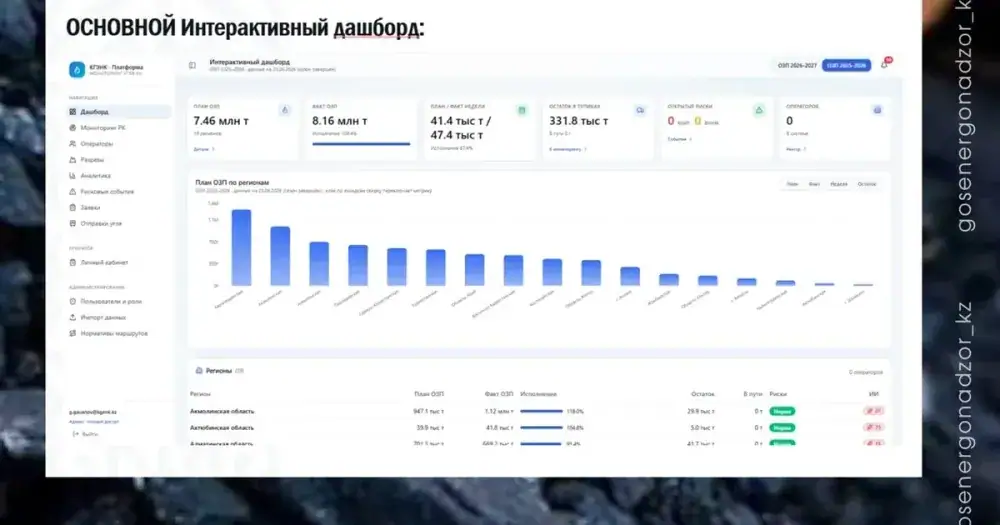
The Ministry of Energy is introducing a unified digital monitoring system for coal supplies, which will track the movement of fuel throughout the entire supply chain: from extraction to delivery to regions and sale to the public. This initiative is crucial for promptly identifying deviations and assessing risks, helping to prevent potential supply issues.
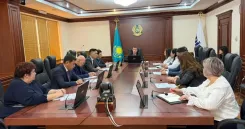
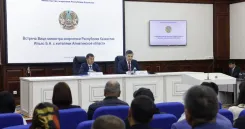
The first meeting of the Republican Headquarters for Ensuring the Communal and Household Sector and Public with Coal was held in the Committee for State Energy Supervision and Control of the Ministry of Energy.
The headquarters will operate until the end of the 2026-2027 heating season, with its main task being to ensure sufficient coal reserves, stable logistics, and uninterrupted deliveries to all regions of the country throughout the heating season.
During the 2025-2026 heating season, around 8.15 million tons of coal were delivered to the regions, which is 109% of the planned amount. For the upcoming heating season, the requirement is set at 7.3 million tons.
In the new season, supply monitoring will be enhanced through a unified digital platform. The country currently has 951 railway sidings and 586 operators working with coal. Previously, information was received from multiple sources, but now it will be consolidated into one system.
The platform provides a unified digital picture of coal movement—from extraction and loading to transportation, stock accumulation, and final consumer sales. It tracks in real time production and loading volumes, coal movement, stock levels at sidings and warehouses, prices, as well as the fulfillment of regional plans.
The system will allow data comparison at different supply stages to quickly identify deviations. For example, it will be possible to detect insufficient stock levels, slow loading, or risks of schedule disruption, enabling preemptive actions before issues impact the end consumer.
Read also:
Ministry of Energy and Industry Experts Discuss Development Prospects for Professional Qualifications in Electricity and Heat Energy
23 October 2026
Comprehensive Digital Traceability to Cover 80% of Energy Resources by 2028
22 October 2026
Over 2,200 Requests from Astana Residents Submitted via TazaQazBot Since Beginning of the Year
21 October 2026
"Our task is to make the entire supply chain transparent and visible at every stage, and most importantly, to identify deviations in advance and take necessary measures before they affect the population's supply," stated the Committee Chairman, Yerzhan Yertayev.
Future plans include expanding the platform's capabilities with artificial intelligence elements for deeper data analysis and precise identification of potential supply chain risks.
During the meeting, reports from coal mining enterprises were heard, and the current situation with coal mining, loading, and supplies to regions was reviewed. Key tasks were identified.
Regional governments are tasked with ensuring regular monitoring of stock levels, timely updating information on the digital platform, and efficiently interacting with all supply chain participants.
Coal operators must maintain adequate stock at warehouses and sidings, ensure uninterrupted sales of coal, properly service the public, and be prepared for increased demand during peak periods.
JSC "NC "Kazakhstan Temir Zholy" is required to provide timely railcars and maintain stable infrastructure operation during peak demand periods.
Coal mining enterprises must meet the regions' requests and necessary loading volumes while maintaining the ability to quickly increase supplies as demand grows.
"The main goal is for the public to receive coal in the necessary amounts throughout the entire heating season. Digital monitoring helps us see the whole supply chain and react swiftly to emerging risks. This requires coordinated efforts from all participants—from coal mining enterprises and transporters to operators and regions," emphasized Yerzhan Yertayev.
reported by ЖКХ24 with reference to the Ministry of Energy website.
Photo: gov.kz