2 November 2026
Development Direction of the President's Address Discussed in Astana: From AI to Energy Security
Discussion on the President's Address in Astana focuses on AI, digital economy, and energy security with key industry leaders reviewing implementation strategies.
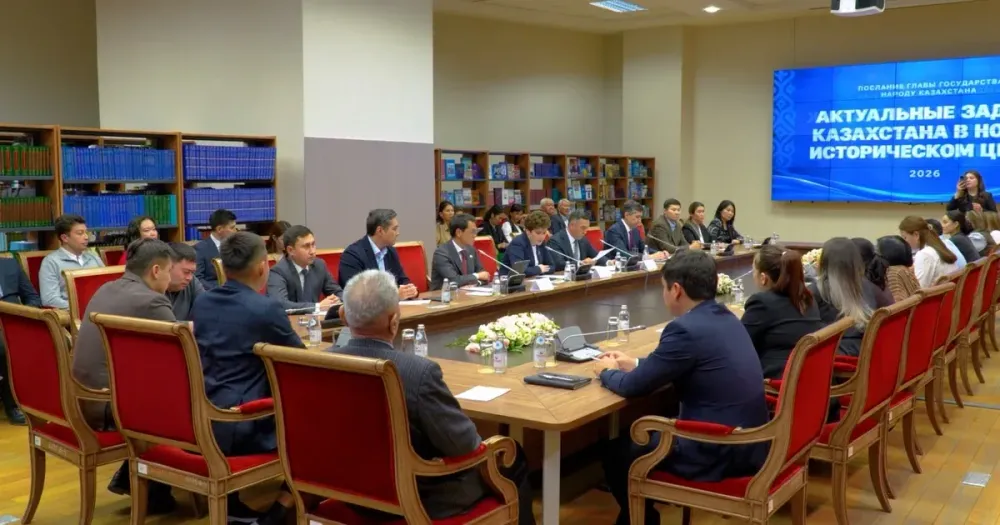
A series of meetings focused on explaining the Address of the President of Kazakhstan, Kassym-Jomart Tokayev, titled "Key Tasks of Kazakhstan in the New Historical Cycle" took place in Astana. The main focus was on transitioning to a people-centered digital economy, developing artificial intelligence, infrastructure projects, and ensuring energy security.
These events were organized to discuss the key points of the Address with representatives from various professional communities and working groups in the capital. The purpose of these meetings was not only to explain the priorities set by the President but also to show how they could be practically implemented in specific industries. Special attention was paid to how the new government initiatives would impact entrepreneurship development, job creation, and income growth among the population.
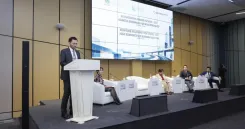
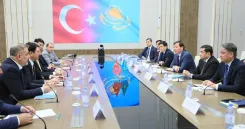
Discussions included participation by Deputy of the Kurultay RK and Chairman of the Committee on Digitalization, Innovation, and Science Darkhan Akhmediev, head of JSC "Kazakhtelecom" Bagdat Musin, and Deputy Minister of Energy RK Bakytzhan Ilyas. The tour covered three key locations in the capital. The first meeting, held at Astana Hub with the IT community, focused primarily on digitalization, acknowledged in the Address as a crucial aspect.
Modern technologies are being considered not only as a separate industry but also as means for the development of other sectors, including construction, energy, and agriculture. Darkhan Akhmediev emphasized that engagement with domestic IT companies opens up new opportunities. Each direction mentioned by the President envisions the integration of digital solutions, which fosters a demand for the innovations of Kazakhstani specialists.
"During the meeting with the IT community, we discussed the President's Address. It's important that digitalization touches all areas, and this is evident from the Address," noted Akhmediev.
The transition to a people-centered digital economy became a key direction in the Address. While previous digital efforts focused on e-government, the new model aims at economic opportunities, emphasizing digital entrepreneurship, remote employment, and online commerce.
Darkhan Akhmediev underscored that modern technologies offer opportunities for regional residents to find jobs and markets, which is particularly important for rural areas. The export of IT services from the country has grown to $1 billion over the past five years, yet further development needs to be accompanied by entry into new markets. Digital platforms can facilitate selling products internationally and providing remote services.
Read also:
From an institutional perspective, the state should support entrepreneurs at all stages — from training to engaging in external economic activities. The "Halyktik kurylys" program for infrastructure renewal was also discussed, with around 6.5 trillion tenge earmarked for updates in healthcare, education infrastructure, and utility networks until 2029.
According to Akhmediev, digital technologies are crucial for designing and forecasting regional needs, which demands advanced solutions and data. For instance, creating digital twins could help anticipate needs and impacts of infrastructure changes.
In his speech, "Kazakhtelecom" head Bagdat Musin also touched upon changes in the field of artificial intelligence. The simplicity of modern AI tools lowers the entry barrier for the industry and simplifies many processes, yet it requires constant knowledge updating. Musin stressed that digital technologies should be developed not just for large companies but also to facilitate self-employment and small project creation.
Digitalization also impacts agriculture. Musin noted that even with quality products, access to sales markets is complicated without developed logistics and intermediary support. He proposed creating digital platforms for interaction between agricultural producers, buyers, and logistics companies.
In the energy sector, as noted by Deputy Minister of Energy RK Bakytzhan Ilyas, the growing demand for electricity must be considered. The President instructed to update the energy balance by 2035. Development requires significant resources and time, particularly considering new energy-intensive industries. The creation of digital twins for energy and oil and gas industry facilities was explored to optimize production processes.
The country is beginning to develop its own SCADA systems and automation solutions in energy, which requires reliability and international standards. After meetings with the IT community, discussions continued at other venues in the capital, emphasizing the importance of domestic Kazakhstani solutions and their connection to the President's goals. The outcome should be new jobs and an improved quality of life in the regions.
reported ZhKH24 with reference to the website of the Astana City Akimat.
Photo: gov.kz