24 October 2026

Why owners don’t want to manage their own building
🌀🌀🌀
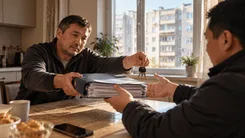
"How much longer do we have to keep sorting this out? Just give me something to sign so this finally starts working!"
Sound familiar?
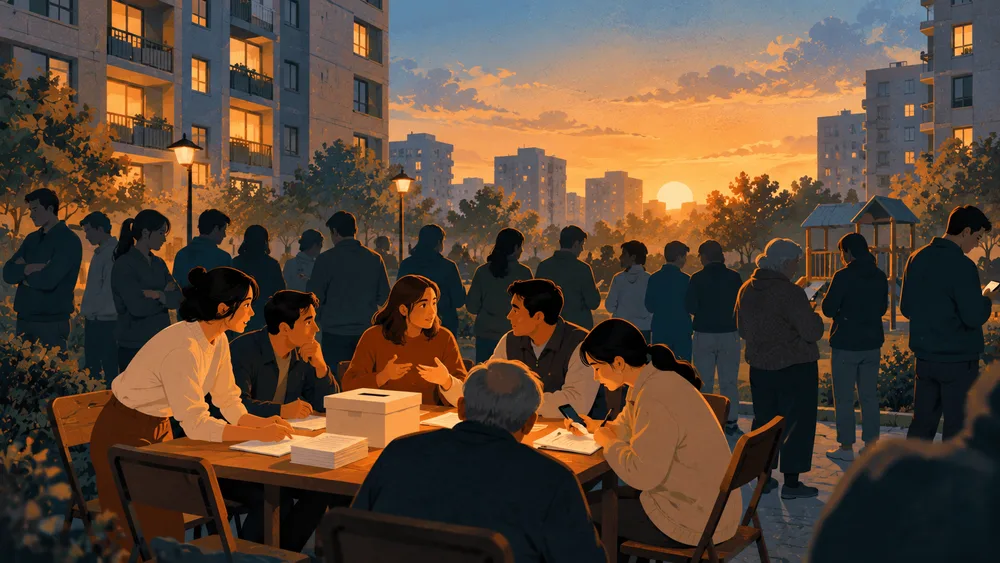
A neighboring building has been arguing for more than seven months now. Some want to change the management company, others want to replace the HOA chairperson. Dozens of messages in the chats, mutual accusations, promises to finally set things straight. Meanwhile the actual problems go nowhere.
Eventually the neighbors push it through and a ballot appears. And... owners sign it, sometimes without even reading all the items on the agenda. The owner genuinely hopes that now, finally, things will get resolved.
But what actually happened?
It looks like the person exercised their right to take part in managing shared property. Except in that moment, they probably weren't thinking about management at all. They just wanted the whole thing to be over.
And this really interests me: how is it that people want change in their own building, yet try to take as little part as possible in the decisions that change depends on?
I see this again and again in my own work, and I keep asking myself: what is actually going on here? Why are people who own shared property worth billions of tenge so reluctant to take part in managing it?
My colleagues are used to a simple explanation: owners are passive, nothing interests them, they don't want to take on responsibility.
But... but... but... What if we look at it differently?
When someone runs into a drawn-out problem — especially one surrounded by arguments, conflicting information and mutual blame — it gets harder and harder to make sense of the details. They look for a simple way out. Because they're no expert in laws and regulations, and honestly, they're lost in all of it!
Psychology has a concept for this: cognitive economy.
Our brain tries not to spend extra effort where a ready-made answer will do. We do this constantly, and in most everyday situations it actually helps us get through life. Yes, really — watch yourself, you do it too!
But in managing a building (and in management generally) that habit can be costly.
👀👂 Instead of studying the agenda in the notice, a person pays attention to who's asking for the vote, how many neighbors have already signed, and how convincing the promise to fix the problem sounds.
And yet that person's signature now becomes a vote counted toward a collective decision. 🫣 And the consequences of that decision will affect every owner, including those who never looked into what it actually said. And by then... it's too late to undo it.
There's another mechanism at play too — spreading responsibility across a large number of people.
When a building has several hundred owners, it's easier for each one to assume someone else will surely sort it out. There's an initiative group, a building council, an HOA chairperson, a manager. Surely they know the right way. Of course — as if they're somehow smarter... Don't worry, they're usually just more active (or quicker, or better at finding an advantage in whatever's available).
But everyone else is thinking exactly the same thing!
So the building ends up with many owners, and remarkably few people willing to actually work through its problems.
This is especially visible in how people treat the HOA chairperson.
As the one responsible for execution, they're expected to deliver working elevators, a repaired roof, safe engineering systems, cleanliness and order. And that seems like a reasonable set of expectations.
But!!! When solving a problem requires approving a budget, agreeing on expenses, or making some other decision at a meeting, a portion of the owners would rather stay out of it.
It's a strange situation: the decision depends on the group, but the responsibility for the lack of a result lands on one person. 🙄
And here I want to point out one more thing.
Who ever taught owners how to be owners?
For many years, the relationship with management organizations followed a fairly simple pattern: the resident gets a bill, pays for the services, and files a complaint if something doesn't work.
Gradually, a familiar behavior pattern took hold: I pay, so someone else should take care of everything.
And now, when that same person is told they need to take part in managing shared property, understand the budget, make decisions about repairs and carry their share of the cost, confusion sets in.
They're used to a different role.
We call them an owner, but the whole way we've organized our interaction with them may have spent years reinforcing the behavior of an ordinary service consumer. And then we're surprised that they don't show initiative.
This brings up a question I find far more interesting than the usual conversation about residents' passivity.
Maybe owner passivity isn't only a cause of problems in building management — maybe it's also a result of how that management was set up in the first place.
If an owner is only ever invited in when signatures or extra money need to be collected urgently, they come to see their participation as an unpleasant chore.
If they only hear about the building's condition, its finances and its technical risks during the next conflict, it's hard for them to see the connection between today's decisions and tomorrow's consequences.
And if, year after year, the chairperson handles everything they possibly can alone, owners gradually get used to the idea that this is simply how things are done.
So the system keeps reproducing each participant's habitual behavior.
The chairperson takes on more and more. Owners take part less and less.
Resentment builds on both sides.
And eventually a situation arises where the problem can no longer be solved without a collective decision — but people have no habit of making one.
I don't think this explains every owner's behavior. Some genuinely don't have the time, some don't trust whoever's behind the initiative, and some study the documents carefully and consciously decide not to support a proposal.
But there's something else that matters more to me here.
Calls to "be more active" don't change much if we fail to notice how the system itself is what trains people to stay on the sidelines.
Maybe the place to start is changing everyday interaction. Not just telling owners what happened, but showing them why it happened, what the options for solving it are, what they cost, and what the outcome actually depends on.
And not only at the moment of an emergency or a vote.
Because taking part in management is a skill too. It develops wherever a person regularly sees the connection between their own decision and what happens to their building.
In the meantime, I'd like you to consider one simple situation.
When an owner signs a ballot without reading it, we see their signature.
What we don't see is everything that led to it: exhaustion from the conflict, the wish to get the problem over with, trust placed in someone else's opinion, the habit of passing responsibility along.
And if we want to change owners' behavior, maybe we should first understand how we ourselves built the system in which that behavior became the norm.
And this is exactly where I'd really like to hear from you — not only HOA chairs and managers, but owners themselves.
Chairs, think back to a time when you were expected to solve a problem, while the people asking refused to take part in the decision that problem actually needed.
And you, owners, think back to the last time you voted on something to do with your building. Did you really understand what you were voting for?
Let's talk about it without the usual mutual blame.
What actually keeps an owner from taking part: indifference, distrust, not understanding — or a management system that's long been used to deciding everything on their behalf?
I'm genuinely interested in your real stories. Maybe that's exactly where we'll see what we haven't noticed yet.
🌿🌿🌿