31 August 2026
Almaty Discusses International Experience in Implementing Low Emission Zones
Almaty discusses the impact of low emission zones on air quality and transport behavior, highlighting international successes in major cities.

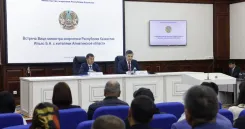
International experience shows that low emission zones (LEZs) can impact not just air quality but also residents' transport behaviors. This was highlighted by Zhuldyz Saulebekova, head of the Almaty Air Initiative, during a briefing at the Regional Communications Service.
According to her, over the past 20 years, the number of cars in Almaty has nearly tripled, while the population has increased by about 600,000 over the last 10 years. This has significantly increased the burden on the transportation infrastructure.
"Transport is distinct because it comprises hundreds of thousands of small emission sources that are directly at our breathing level—alongside roads, near homes, and schools," Zhuldyz Saulebekova noted.
She emphasized that today, low emission zones operate in more than 300 European cities, with similar approaches being applied in China.
According to the expert, international practice shows several main effects of LEZs. In Madrid, following the launch of Madrid Central, NO₂ concentrations in the center fell by about 30% in just the first year. In London, after the introduction and expansion of the Ultra Low Emission Zone (ULEZ), roadside NO₂ levels were approximately 40% lower than they would have been without the measure, and PM2.5 levels decreased by approximately 30%.
Zhuldyz Saulebekova specifically discussed changes in transport behavior. In Milan, after combining the ecological zone with a congestion charge, vehicle traffic in the center decreased by approximately 30%. In Bradford, from 2022 to 2024, 87% of taxis adopted new ecological standards, 370 buses were upgraded, and 33 electric buses were procured.
Read also:
Another example is Sofia. Before the introduction of LEZ, approximately 20,000 low-emission-standard vehicles moved daily in what would become the designated zone. Over two years, their number decreased by about 90%.
"International experience shows that people's behaviors begin to change even before restrictions are fully launched if future rules are clearly communicated ahead of time. Moreover, restrictions should be accompanied by the development of public transport and other accessible alternatives," she said.
The expert outlined four conditions for the effective operation of LEZ in Almaty: phased introduction of requirements, development of public transport, economic incentives for vehicle fleet renewal, and clear communication with residents.
As an example of economic support, she cited China's experience, where restrictions were accompanied by scrapping programs, compensations, and benefits. A similar approach was applied in Sofia in the heating sector—approximately 20,000 heating units were replaced free of charge in 11,000 households.
According to Zhuldyz Saulebekova, informational work is also crucial. Together with Eco Almaty, the organization has already launched a LEZ campaign, including a series of videos titled "Invisible Accidents," dedicated to the impact of air pollution on health.
"A successful LEZ is not just about restrictions. It involves a phased approach, developed public transport, economic support, and clear rules for people," she concluded.
reported by Housing and Communal Services 24, referencing the website of Almaty's City Administration.
Photo: gov.kz