27 August 2026
Labor Inspectors Intensify Monitoring of Workers' Rights in Astana
State labor inspectors in Astana increase monitoring of labor law compliance, issuing fines and enhancing worker safety measures.

State labor inspectors in Astana have intensified their monitoring of the country's labor law compliance. Inspections are conducted in accordance with the Labor Code of the Republic of Kazakhstan and based on the Entrepreneurial Code of the Republic of Kazakhstan.
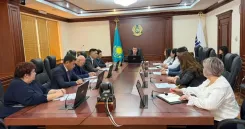
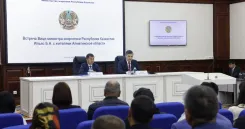
At a briefing by the capital's Communication Service, Yerlan Ismagulov, head of the Department of the State Labor Inspection Committee of the Ministry of Labor and Social Protection of the Population of the Republic of Kazakhstan in Astana, provided an update on the inspectors' current activities. Since the beginning of the year, they have reviewed 10,202 inquiries and conducted 271 unscheduled inspections. As a result of identified violations, 125 directives were issued, and 114 legal and physical entities were held administratively accountable with total fines amounting to 22.2 million tenge.
Read also:
To prevent labor disputes, the state labor inspection, in collaboration with the prosecutor's office, organizes meetings with employers from the high-risk list. This year, 30 field visits have been made, covering more than 2,870 workers. The focus is on safety and labor protection, reducing occupational injuries, and mandatory insurance for workers against accidents.
Yerlan Ismagulov noted that drones have started being used on construction sites to monitor safety compliance. Since the beginning of the year, 13 employers have been held administratively accountable with total fines of 1.1 million tenge. Aerial monitoring allows for the detection of violations that are more challenging to uncover through traditional inspections.
reports ЖКХ24 citing the official website of the capital's akimat.
Photo: gov.kz
27 August 2026
Inventory of Kazakhstan's Apartment Housing Stock and Formation of a Unified House Registry
Kazakhstan launches a comprehensive inventory of its apartment housing stock, creating a unified registry for better management and maintenance.
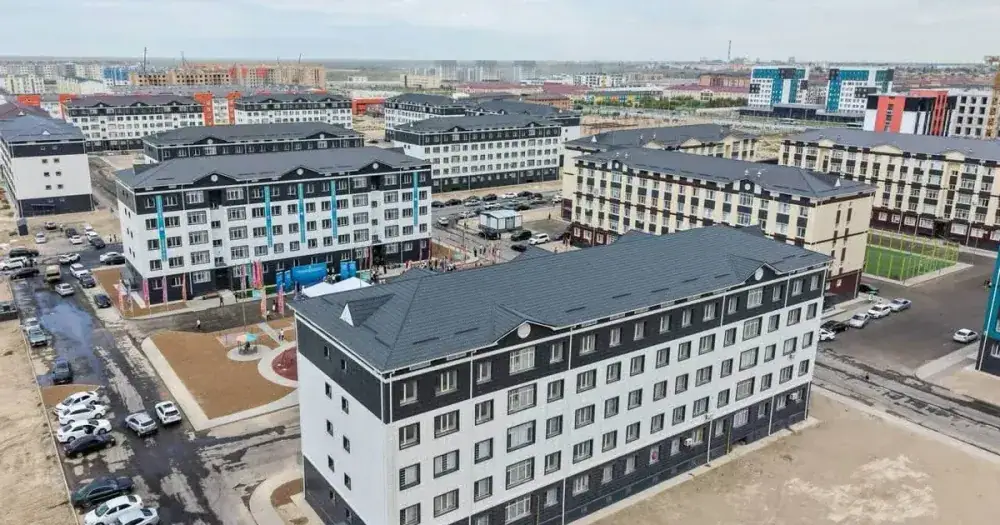
Kazakhstan is set to undertake a comprehensive inventory of its housing stock. Every apartment building across the country will be compiled into a single registry, containing information on address, number of floors, number of apartments and non-residential premises, building condition, elevators, and metering devices.
The initiative is being conducted in accordance with the Law "On Housing Relations" and is part of the national project "Modernization of the Energy and Utility Sectors," as well as planning for state programs on major repairs and technical inspections.
The inventory includes all buildings that meet the definition of an apartment building as per Article 2 of the Law "On Housing Relations": a standalone building consisting of shared condominium property and two or more apartments or non-residential premises. Buildings will be recorded irrespective of the number of floors, the number of property owners, registered condominium objects, or the selected form of management — including two- and four-apartment houses in rural areas and houses where the management form has not been determined yet.
Each building in the registry will have a unique identifier — an address registration code (ARC). This code links the building to other sources of information: technical specifications of the building, quantitative and qualitative indicators, data about premises, details about management form and elevator conditions, and data on connections to networks and metering devices.
Read also:
The process of data transfer is defined by the Rules for the Formation, Processing, Centralized Collection, and Storage of Information in the Field of Housing Relations and Housing and Communal Services. These rules also specify the organizations required to provide data: local executive bodies, natural monopoly entities, owners' associations, housing cooperatives, and other management entities.
Personal data of owners — last names, individual identification numbers, information on title documents, and debts — will not be collected during the inventory.
The registry will provide precise lists of buildings in need of major repairs and elevator replacements, an understanding of the actual level of housing stock equipped with metering devices, and a calculation of the regions' needs for network modernization based on factual data rather than average estimates. This will improve the accuracy of utility billing, enhance the operations, and maintain better executive documentation among management cooperatives and companies.
The information collection is being organized by regional akimats through district and city housing inspections. Notifications and working forms are sent to owners' associations, representatives of jointly managed houses, management entities, and utility service providers.
reports ЖКХ24 citing the website of the Department of Energy and Housing and Communal Services of Kyzylorda Region.
Photo: gov.kz